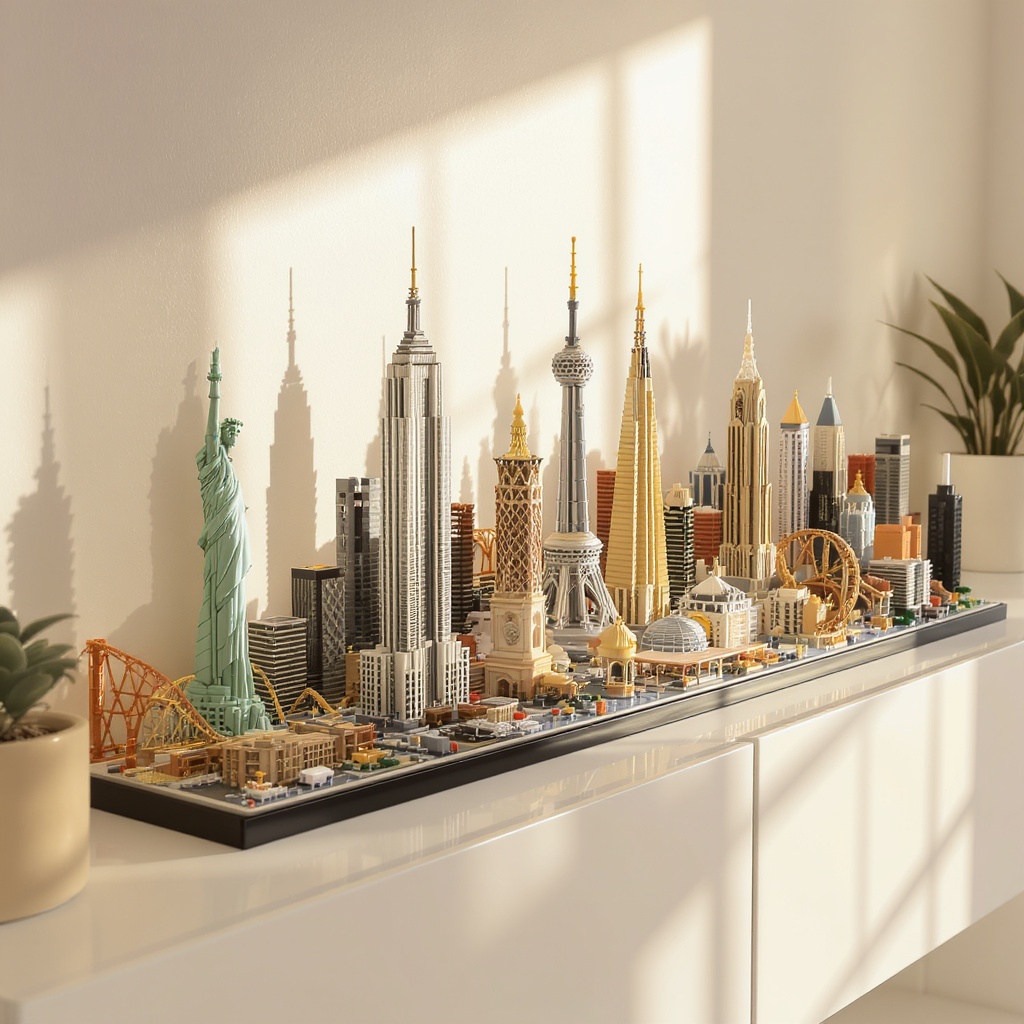
The Complete Guide to Displaying and Storing LEGO Architecture Sets
*How collectors protect their builds while maximizing visual impact*
LEGO Architecture sets are stunning centerpieces—but they're also delicate investments. A single Fallingwater or Empire State Building represents 50+ hours of building and real money invested. Proper display and storage protects:
- Structural integrity (preventing collapse under vibration or weight)
- Color preservation (UV damage and oxidation)
- Piece longevity (brittle plastic from heat/humidity cycles)
- Resale value (condition is everything for collectors)
---
Part 1: Display Options for Architecture Sets
Option 1: Wall-Mounted Display Shelves (Best for Small/Medium Sets)
Best for: Fallingwater, Barcelona Pavilion, Robie House Why it works: Saves desk/floor space, creates dramatic visual impact, and keeps builds dust-protected from above.
Setup:
- Use floating shelves (12–16" deep) for sets under 3,000 pieces
- Mount shelves at 60–72" height (eye level when standing) for best viewing
- Ensure weight capacity ≥ 3x the set's weight (a 2,500-piece set ≈ 4–5 lbs; use shelves rated 15+ lbs)
- Use museum-quality picture wire on the back of larger sets for security against tipping
Lighting:
- Position warm LED strip lights (3000K color temp) above each shelf
- Aim light downward at a 45° angle to avoid glare on minifig faces
- LEDs stay cool (no heat damage) and run 24/7 without UV risk
Spacing: Leave 6–8" clearance above each build so light doesn't cast harsh shadows.
Option 2: Glass Display Cases (Best for Showpieces & Protection)
Best for: Limited editions, signed sets, high-value builds Why it works: Maximum dust protection, temperature stability, and wow factor.
Recommended cases:
- IKEA Detolf (20" × 16" × 40", ~$60): Perfect for sets up to 3,000 pieces; neutral gray back makes builds pop
- Custom acrylic cases ($150–$500): For premium sets; allows 360° viewing
- Wall-mounted glass cabinets ($100–$300): Great space saver; professional appearance
Setup inside the case:
- Base layer: 2–3 cm of museum board (acid-free) or felt to prevent micro-vibrations
- Back lighting: Warm LEDs mounted horizontally behind the build (creates depth and drama)
- Vertical spacing: Keep the top 3" clear of set pieces to avoid crushing/shadows
- Humidity control: Add a small silica gel packet (refresh monthly) to prevent warping in humid climates
Climate inside the case:
- Ideal temperature: 68–72°F (stable)
- Humidity: 35–50% (too dry = plastic brittleness; too wet = paint flaking)
- Check monthly and adjust—a case near a radiator or AC vent creates stress on pieces
Option 3: Desk/Tabletop Display (Everyday Centerpiece)
Best for: Sets you interact with frequently or want to show guests Why it works: Easy access, visible, and can be part of a larger display ecosystem.
Setup:
- Use a low bookshelf or console table (36" deep minimum) to keep builds away from arm's reach
- Position sets 12+ inches from the edge to prevent accidental knocking
- Group 3–5 sets for visual interest (e.g., all Fallingwater variants, or a mini "city skyline")
- Avoid direct traffic paths (no build is worth a toddler crash)
Elevation & depth:
- Stagger sets by height so smaller builds aren't hidden
- Use small risers or museum blocks (2–4" high) to create visual layering without adding weight risk
- Leave 2–3" gaps between sets for dusting access
Protective measures:
- Place sets on thin rubber pads (museum-quality) to prevent slipping
- Keep a small soft-bristle brush nearby for monthly dusting
- Avoid placing near open windows (direct sun + temperature swings)
---
Part 2: Storage Solutions for Unbuilt & Spare Pieces
Storing Sealed LEGO Boxes
Location:
- Cool, dry place (basement or climate-controlled closet, not an attic or garage)
- Avoid direct sunlight, heating vents, and humidity fluctuations
- Keep away from water pipes and potential leak zones
Stacking & shelving:
- Don't stack vertically beyond 3 boxes high (crushing risk damages minifigs inside)
- Use wire shelving (not solid wood, which traps moisture)
- Place acid-free tissue paper between boxes to prevent color transfer
Humidity control:
- Add a rechargeable silica gel dehumidifier to the storage area
- Check every 2–3 months; replace if saturated (beads turn pink)
- Target: 35–50% relative humidity
Organizing Built Sets for Storage (Long-Term)
If you're storing a completed Architecture set (not displayed) for 6+ months:
Container choice:
- Clear plastic bins with tight-sealing lids (not cardboard; cardboard absorbs moisture)
- Size: 12L–18L per set (don't overstuff)
- Label the bin with set name, date, and piece count
Packing inside the bin: 1. Wrap the build loosely in acid-free tissue paper (NEVER plastic wrap; traps moisture) 2. Fill gaps with bubble wrap or foam padding (prevent shifting during transport) 3. Separate fragile pieces: Store minifigs, flags, and small accessories in a small labeled pouch inside the bin 4. No silica gel inside the bin (you want airflow, not a sealed environment)
Stacking & environment:
- Stack bins no more than 3 high
- Keep off concrete floors (use wooden pallets to allow air circulation underneath)
- Store in climate-controlled space; avoid basements or attics
Spare Pieces & Overflow Storage
- Use small plastic organizers with dividers (fishing tackle boxes work great, ~$15–30)
- Sort by color, not type (easier for future builds)
- Store in the same climate-controlled area as complete sets
- Label drawers clearly; include a small color reference photo
Bulk piece storage:
- Stackable clear drawers on a shelving unit (IKEA Alex drawers, ~$60 per 5-drawer unit)
- One drawer per color family (white, gray, brown, tan, black, red, blue, green, yellow, specialty)
- Keeps inventory organized and dust-free
---
Part 3: Care & Preservation Tips
Dusting Without Damage
Frequency: Monthly for displayed sets (quarterly if sealed/in cases)
Tools:
- Soft-bristle brush (old makeup brushes work; avoid stiff toothbrushes)
- Compressed air (short bursts, 6–8" away; too close = forces dust into joints)
- Cotton swabs for crevices and minifig faces
Technique: 1. Brush horizontally; avoid sweeping down (dust settles between bricks) 2. Hold the set steady with your other hand (vibration = toppling risk) 3. Never use liquids or solvents on painted pieces or decals 4. For stubborn dust, use distilled water + soft cloth on gray/white pieces only; dry immediately
Preventing Color Fading
UV protection:
- Keep sets away from direct sunlight (south/west-facing windows)
- Use UV-filtering window film ($20–$40) if your display is near a window
- LEDs with 3000K or lower color temp don't emit UV and won't fade colors
- Close curtains/blinds during peak sun hours (11am–3pm)
Temperature stability:
- Avoid displays near heaters, AC vents, or radiators
- Plastic becomes brittle in cold, warps in heat
- Keep displayed sets at 68–72°F year-round if possible
Humidity swings:
- Rapid humidity changes cause paint to crack and decals to peel
- Use a small hygrometer ($10) to monitor your display area
- If humidity drops below 30%, add a humidifier; above 60%, add a dehumidifier
Structural Support for Large Sets
For sets over 5,000 pieces (or over 10 lbs):
- Base plate reinforcement: Use a wooden platform (hardwood or plywood, 1/2" thick) under the build for weight distribution
- Internal bracing: For tall buildings (Empire State, Big Ben), add museum putty at stress points where the build meets its base
- Wall anchoring: For wall displays, use heavy-duty L-brackets rated for 3x the set's weight
Checking structural integrity:
- Every 6 months, gently test the build's stability (light hand pressure on upper sections)
- If pieces shift, check for loose connectors at the base and re-seat them
- Add museum putty if wobbling is detected
Dealing with Fading & Oxidation
If colors have already faded:
- Move the set away from the light source immediately (further damage is preventable)
- Faded color cannot be reversed, but further degradation can be stopped
- Consider rotating the display (show 3–4 sets and swap monthly) to expose all collection evenly
Yellow/brown oxidation on white pieces:
- Common on older LEGO (pre-2005)
- Cleaning: Soak in distilled water + mild dish soap for 30 min, gentle brush, air dry
- Prevention: Keep white pieces in cool, dark storage; UV and heat accelerate yellowing
---
Part 4: Travel & Transport Safety
Moving a displayed set:
- Disassemble if traveling more than 2 hours (vibration risks damage)
- If you must keep it assembled, wrap entirely in bubble wrap (3–4 layers)
- Pack in a rigid box with padding on all sides (8" minimum)
- Transport in the car cabin, not the trunk (temperature extremes)
Before reassembling after transport:
- Inspect for loose connections or cracked pieces
- Rebuild any sections that shifted during travel
- Check minifig faces for paint cracks
---
Checklist: Your LEGO Display & Storage Setup
- [ ] Display location chosen (shelf, case, or table; UV-free and climate-stable)
- [ ] Lighting installed (LED, 3000K or lower, angled to avoid glare)
- [ ] Humidity monitored (hygrometer placed; target 35–50%)
- [ ] Base protection ready (museum board, felt, or rubber pads)
- [ ] Dust tools assembled (soft brush, compressed air, cotton swabs)
- [ ] Storage containers selected (sealed bins with labels for backups)
- [ ] Silica gel supply stocked (for sealed storage areas)
- [ ] Dusting schedule set (calendar reminder for monthly maintenance)
---
FAQ: Display & Storage
Q: Can I use a regular bookshelf to display LEGO sets? A: Yes, if it's sturdy (weight capacity ≥ 50 lbs for multiple sets) and away from high-traffic areas. Avoid shelves near doors, hallways, or anywhere kids/pets could bump them.
Q: How often should I rotate my sets in/out of display? A: If space is limited, rotate every 2–3 months to expose different sets to UV. For permanent displays, no rotation needed—just ensure consistent lighting and climate.
Q: Will humidity damage my sealed LEGO boxes? A: Yes. High humidity (>60%) can damage minifig paint and decals inside the box. Keep sealed boxes in climate-controlled storage with silica gel packs.
Q: Is a glass case worth the cost? A: For sets over $300 or limited editions, yes. The dust protection and climate stability pay off over years of ownership. For standard retail sets, floating shelves with LED lighting are a better value.
Q: Can I display LEGO in direct sunlight? A: No. Direct sun fades colors within 6–12 months. Use UV-filtering film or keep sets out of south/west-facing windows.
---
Final Tips
1. Start simple: A floating shelf + LED lights is 80% of the solution. Invest in glass cases and climate control later. 2. Document your builds: Take photos from multiple angles before storing. Useful for resale valuations or insurance. 3. Join the community: Share your display setup on r/lego or LEGO collector forums—you'll get feedback and inspiration. 4. Review annually: Every June, assess your storage and display. Move sets that aren't being viewed; rotate sealed boxes.
Your LEGO collection deserves a home that honors the craftsmanship and time you've invested. With the right display and storage setup, you'll enjoy those builds for decades—and they'll hold their value for collectors who follow.
Written for DisplayGrade collectors who care about preservation.
Browse Architecture sets on DisplayGrade to find your next build.