The Adult LEGO Display Size Guide: Pick the Right Set for Your Shelf
The most disappointing adult LEGO purchase is often not a bad set. It is a great set that does not fit the place you had in mind for it. A model can fit its box, your desk, or a temporary building table and still fail when you try to give it a permanent home.
DisplayGrade's display-size bands make that decision easier. They organize the catalog by the tallest built dimension, so you can start with the space you actually have and then choose a theme, skill level, and DisplayGrade score within it. Use the compact catalog, mid-size catalog, statement catalog, and showpiece catalog as starting points, then confirm the full dimensions on each set page.
Why Display Dimensions Matter
Piece count is a useful signal for build length and complexity, but it is not a shelf plan. A tall botanical model can have fewer pieces than a wide vehicle. A ship may look modest from the front and occupy most of a shelf once its full length is supported. Display orientation can also change the footprint: some models stand upright, some lie flat, and some have movable sections that need extra room when opened.
The size band is therefore a planning shortcut, not a judgment of quality. It tells you how much physical presence to expect. Pair it with the individual dimensions, the model's weight, and the way you intend to view it. A set with a high DisplayGrade still needs a stable, appropriately deep surface.
How to Measure a Shelf Before You Buy
Start with the display location empty. Measure the usable opening rather than the outside of the bookcase, cabinet, or wall niche:
- Width — measure from side to side at the level where the model will sit. Record the narrowest point if the shelf has trim, doors, or supports.
- Depth — measure from the front edge to the back wall. Leave room for the model's deepest section, not just its base. A vehicle nose, ship bow, or angled wing can extend beyond a rectangular footprint.
- Height — measure from the shelf surface to the lowest obstruction above it. Include lighting, cabinet rails, and the clearance needed to lift the model out without catching the top.
- Clearance — reserve at least a few extra centimeters on every exposed side for dusting, placing the model, and seeing details. Leave more room above tall or delicate builds if you will need to remove them often.
DisplayGrade dimensions describe the built model, not the packaging. They are a solid starting point, but measure your own display setup too. If the model has a removable panel, articulated limb, or opening mechanism, decide whether you want it posed open and measure that configuration.
Weight deserves the same attention. A 2.9 kg castle or a 7.5 kg walker needs a level, rigid surface; a narrow floating shelf may bow even when its dimensions look generous. For heavy sets, check the shelf's load rating, spread the load over a broad base, and avoid placing the model where a door or passing shoulder can bump it.
Compact: Under 25 cm
Compact sets are the easiest to place on a desk, bedside table, shallow bookcase, or small cube. The catalog defines this band as a tallest dimension under 25 cm. They work well when you want a focused display without dedicating a full shelf, and they are often the easiest models to rotate seasonally.
There is no compact example in this month's featured six, so use the compact sets page to see the current catalog rather than assuming a small piece count guarantees a compact footprint. Botanicals, helmets, small dioramas, and some architecture models can fit here, but always check the listed length, depth, and height before buying.
For a compact placement, prioritize the viewing angle and the space needed to clean around it. A shallow shelf can be enough, but a model with a wide base may still need more width than its height suggests. A small riser can improve visibility, provided it is stable and rated for the model's weight.
Mid-Size: 25–50 cm
Mid-size is the most flexible band for a normal bookcase, media console, or dedicated display shelf. DisplayGrade's catalog boundary is 25–49.9 cm at the tallest axis. These sets have enough presence to anchor a section of a room without taking over the whole piece of furniture.
The Bugatti Bolide is a useful mid-size reference. Its current catalog dimensions are 48 × 21 × 14 cm and its listed weight is 1.60 kg. With 905 pieces and a DisplayGrade of 78, it shows why length matters: the car is not especially tall, but its 48 cm span needs a long, clear shelf. Plan for access to both sides if you want to appreciate the bodywork and visible W16 engine details.
For mid-size models, measure the shelf's depth as carefully as its width. A 21 cm deep model may fit on paper and still feel cramped if the front edge is occupied by a rail or if you need space to reach behind it. Leave a little breathing room so the model reads as a display object rather than a tight row of stored items.
Statement: 50–75 cm
Statement sets need a deliberate location. The catalog uses 50–74.9 cm for this band, which is roughly the point where a model starts to dominate a shelf section or sideboard. These are good choices when you want one centerpiece, a two-level arrangement, or a display organized around a single theme.
The Bonsai Tree is a useful reminder that height can move a seemingly small model into a larger band. Its current dimensions are 19 × 19 × 33 cm, its weight is 0.54 kg, and its 878 pieces carry a DisplayGrade of 89. Its footprint is modest, but the 33 cm height means it should be measured as a statement-band model in the current catalog. Leave enough height for the canopy and enough light around it to keep the silhouette clear.
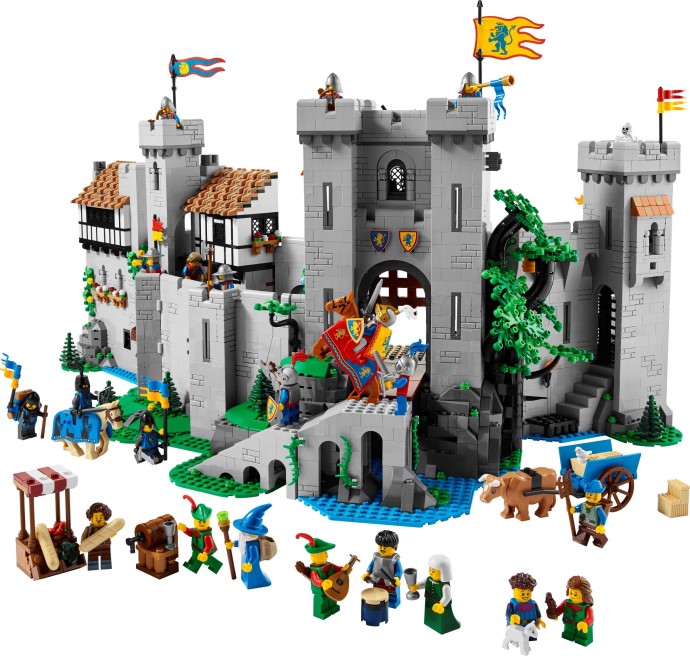
The Lion Knights' Castle shows the other end of the same band. At 55 × 37 × 53 cm and 2.90 kg, its 4,514 pieces and DisplayGrade of 91 come with a much larger footprint and a meaningful load on the shelf. Measure the depth, confirm the shelf is rigid, and decide whether you want room to view the rear as well as the facade.
If your furniture has adjustable shelves, move the shelf above before building. It is much easier to create the clearance once than to dismantle a finished model because the top tower or roof cannot pass the opening.
Showpiece: Over 75 cm
Showpieces are room-planning decisions. DisplayGrade's stored boundary starts at 75 cm, even though the band is often described as over 75 cm. They may need a dedicated console, a reinforced shelf, a display table, or a wall location rather than a standard bookcase. Check the full dimensions and weight before you order, and measure the route from the building area to the final display location.
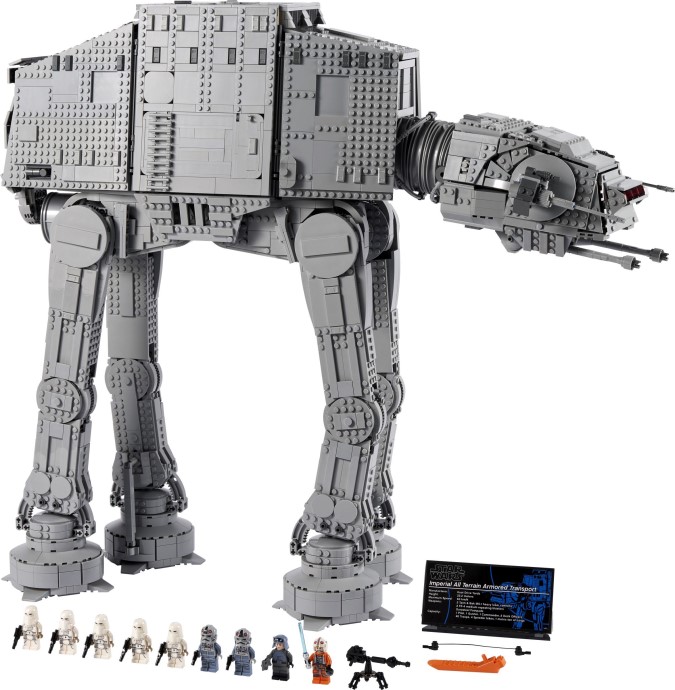
The AT-AT is 110 × 60 × 27 cm, weighs 7.50 kg, contains 6,785 pieces, and has a DisplayGrade of 94. Its width and depth matter as much as its height: this is a broad, heavy model that needs a deep, strong surface and clearance around its legs and head.
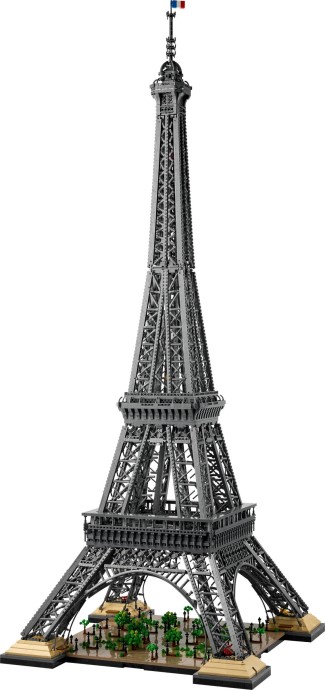
The Eiffel Tower is a different kind of showpiece. Its catalog dimensions are 47 × 16 × 149 cm, with 10,001 pieces, a 2.50 kg weight, and a DisplayGrade of 96. The footprint is relatively narrow, but the 149 cm height can exceed a cabinet, shelf opening, or ceiling clearance. Measure vertically, including the route for lifting it into place, before you start the build.
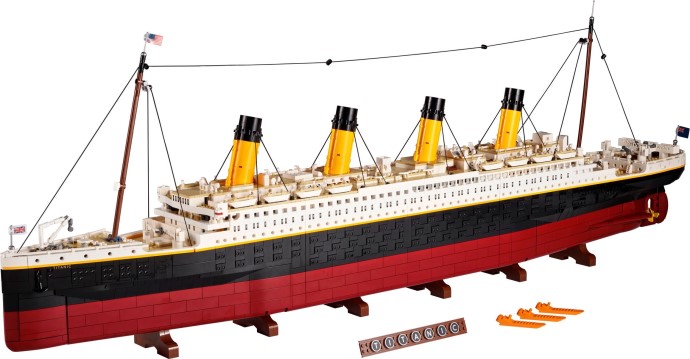
The Titanic demonstrates why the intended pose belongs in your measurement notes. Its current flat-display dimensions are 135 × 22 × 27 cm, it weighs 4.70 kg, contains 9,090 pieces, and has a DisplayGrade of 97. It is long rather than tall, so it needs a sturdy surface with uninterrupted length. Make sure the shelf will support the load across the model's base instead of concentrating it at one unsupported edge.


Compare the Bands Before You Choose
The band tells you how much space to reserve; the catalog details tell you whether the set suits the rest of the room. Use the full sets catalog to filter candidates, then open individual pages for the current image, dimensions, DisplayGrade information, and retailer availability. Prices change, so use the live deals page for current offers rather than relying on a static number in an article.
| Display band
When two sets fit the same band, use the comparison tool to put their dimensions, pieces, and DisplayGrade values side by side. If the build looks right but the difficulty does not, check the skill-level guide before committing. The best display set is one you can finish, move safely, and enjoy from the angles your room actually provides.
Purchase Checklist
Before buying an adult LEGO display set, run through this short list:
- Measure the usable space — record width, depth, height, and any fixed obstructions.
- Check the built dimensions — compare every axis with the model's intended pose, not just the box or a product thumbnail.
- Add clearance — leave room to place, dust, view, and remove the model without scraping adjacent objects.
- Confirm the load — compare the model's weight with the shelf rating and use a rigid, level surface for heavier builds.
- Plan the route — oversized models may not fit through the shelf opening, doorway, or stair turn after they are assembled.
- Choose your band first — browse compact, mid-size, statement, or showpiece candidates before comparing themes.
- Check live availability — open the set detail page and deals for current retailer prices and stock.
Display and Maintenance Tips
Once a model is in place, a small maintenance routine protects both the build and the furniture. Dust with a soft makeup brush or low-power air blower rather than a cloth that can catch small elements. Support long models from underneath when moving them, and lift from the base instead of pulling on a tower, wing, mast, or decorative top section.
Keep direct sunlight and damp areas in mind. Strong light can fade colors over time, while humidity and temperature swings are poor conditions for a long-term display. Avoid blocking vents, radiators, and frequently opened doors. For a heavy showpiece, check the shelf after a few weeks for sagging and reposition the load if necessary.
Finally, leave yourself an exit plan. A display is easier to enjoy when the model can be removed for cleaning, photography, or a seasonal rotation without dismantling half the room. That extra clearance is part of the purchase decision, not wasted space.
Further Reading
Start with the shelf fit guide for a more detailed measurement workflow, then browse the full DisplayGrade catalog by band. Use Compare when two models fit your room, Deals when you are ready to shop, and Skill Level to make sure the build matches your experience.
The right adult LEGO set is the one whose design you love and whose physical requirements your room can support. Measure first, choose the size band second, and use DisplayGrade's live set pages for the current details before you buy.